
How many porta potties do I need for a construction site?
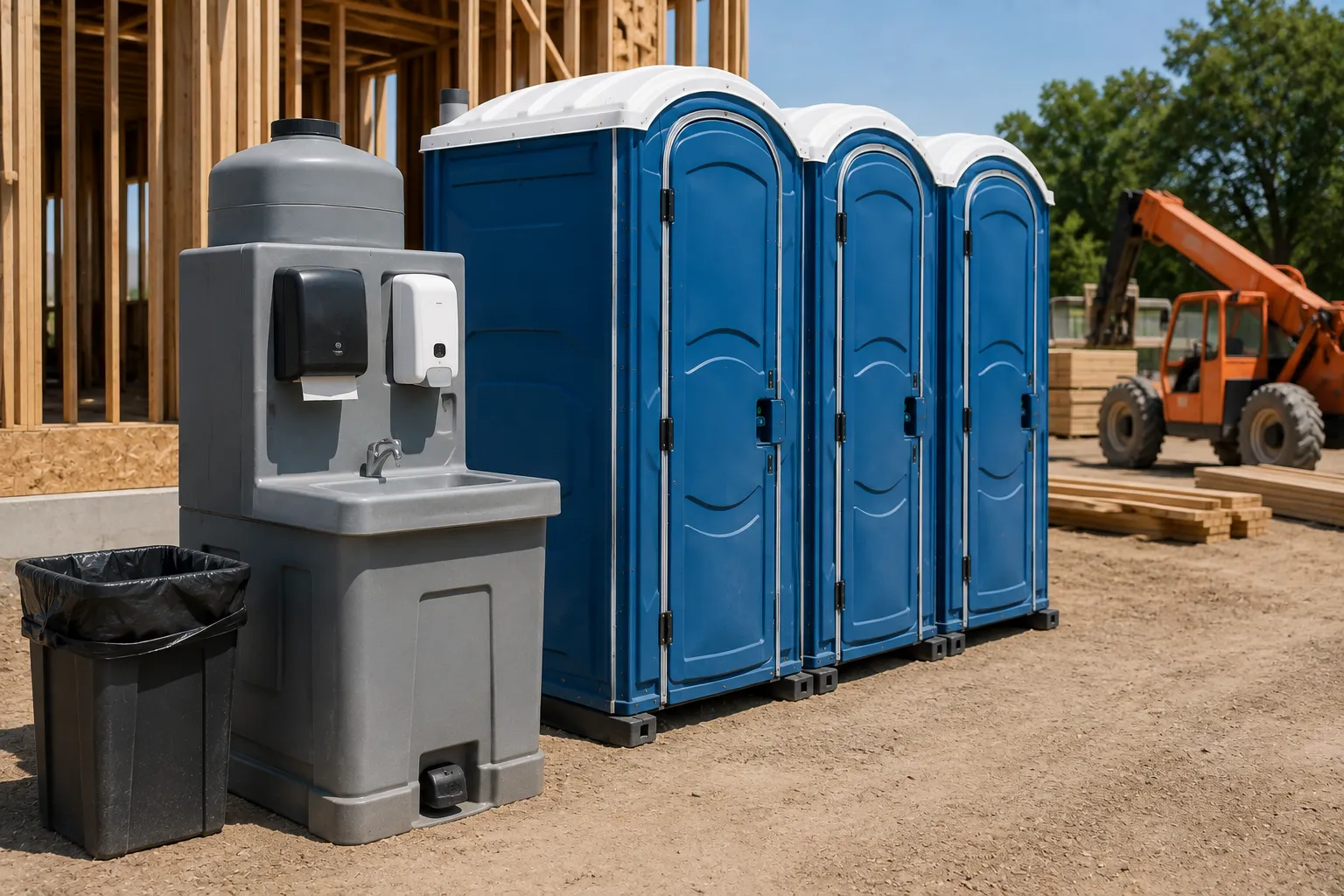
Start with your headcount and let OSHA 1926.51(c) do the math. Crews of 20 or fewer need one toilet facility, period. Once you cross 20 workers, the rule shifts to one toilet seat and one urinal per 40 workers, and at 200 or more it drops to one seat and one urinal per 50. A 35-person framing crew working a site near North Kansas City, 2.6 miles northwest of downtown, falls into that 20-to-40 bracket and needs two toilet facilities minimum. Multi-week jobs usually run standard porta potty rental units on a weekly service cycle rather than daily swaps. If your trade involves paint, coatings, herbicides, or insecticides, OSHA 1926.51(f)(1) also requires washing facilities on top of toilets, which is where a handwashing station rental earns its keep. Field crews on farm sites fall under a different standard: OSHA 1928.110 calls for one facility per 20 hand-labor workers, reachable within a quarter mile. Check the OSHA portable toilet requirements page before you order, and use the how many porta potties do I need checklist to confirm headcount against shift overlap, since two shifts working the same hours count as one combined headcount, not two.
OSHA jobsite toilet count by crew size
| Crew size | Toilets required | Notes |
|---|---|---|
| 1-20 workers | 1 toilet facility | 1926.51(c) minimum |
| 20-39 workers | 1 seat + 1 urinal per 40 | scales per bracket |
| 40-199 workers | 1 seat + 1 urinal per 40 | add units as crew grows |
| 200+ workers | 1 seat + 1 urinal per 50 | ratio loosens at scale |
A 65-person crew building out a warehouse near Gladstone, 8.2 miles north of Kansas City, needs to count in the 40-199 bracket, which usually lands around three to four units once you account for the per-40 scaling. Bigger sites often mix in a portable restroom rental trailer for supervisors and combine it with standard units for the trade crews.
How many porta potties do I need for an event?
Event headcount and hours both drive the number, more than any fixed ratio does. The rough guide most planners use is one unit per 50 guests for a four-hour event, then add units as hours climb. A county fair pulling 800 people over eight hours needs roughly 16 units, and that's before accounting for lines. Compare that to a golf tournament with 150 spectators moving across a course over six hours, which usually needs 4 to 6 units spread along the route rather than clustered at one spot. See event restroom rental for load-in specifics and festival restroom rental for multi-day layouts.
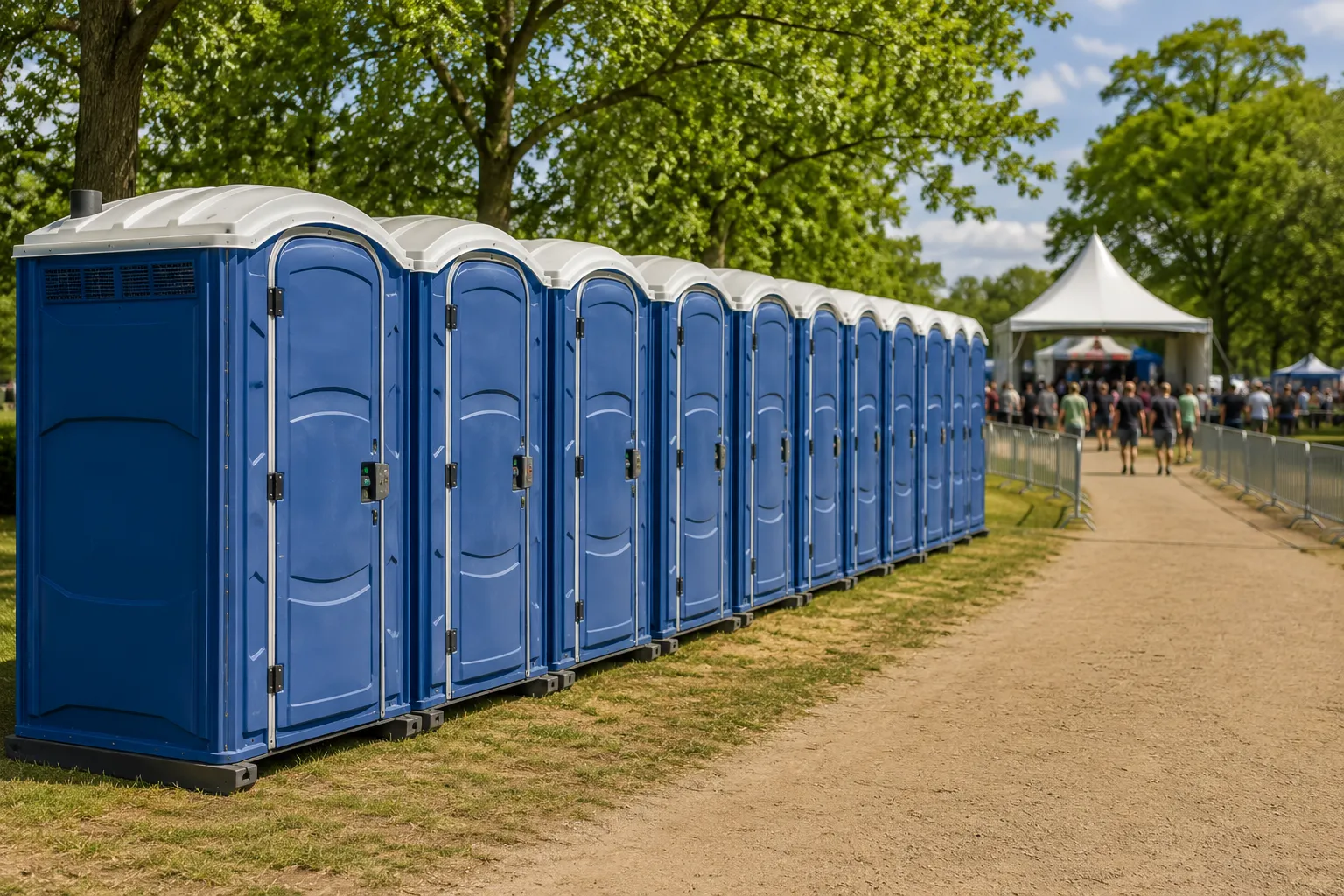
Event restroom count by headcount and hours
| Guests | 4 hours | 8 hours | Add for alcohol |
|---|---|---|---|
| 50 | 1-2 units | 2-3 units | +1 unit |
| 100 | 2-3 units | 3-4 units | +1 unit |
| 250 | 5 units | 6-7 units | +2 units |
| 500 | 10 units | 12 units | +3 units |
| 800 | 16 units | 18-20 units | +4 units |
Alcohol service pushes bathroom trips up sharply, so add roughly 10 to 15 percent more units whenever a bar is running. A wedding with 150 guests and an open bar near Blue Summit, 7.2 miles southeast of Kansas City, should plan for one extra unit beyond the dry-event number. For a polished guest experience, many hosts swap standard units for a deluxe flushable porta potty or book a 2 stall restroom trailer instead. Multi-day festivals need daily servicing built into the quote, since a unit rated for 10 users over a standard 40-hour week under ANSI/PSAI Z4.3 gets overwhelmed fast at festival volume.
Do I need an ADA-accessible unit?
Yes, if you're clustering portable toilets for public use. ADA Standards section 213.2 requires that at least 5 percent of clustered single-user units be accessible, with a minimum of one no matter how small the cluster. That means even a two-unit setup for a small block party in Raytown, 13.6 miles southeast of Kansas City, needs one ADA unit. The accessible unit itself has to meet real dimensions: a 60 inch turning circle per section 304.3.1, a 32 inch clear door opening per section 404.2.3, and a stable, slip-resistant floor per section 302.1. See ADA accessible porta potty for unit specs and ADA restroom requirements for the full standard.
How much does the right number of units cost?
Pricing scales with unit count, duration, and service level, not just headcount. A standard unit runs $100 to $350 a day depending on delivery distance and rental length, while a weekly rate for the same unit runs $130 to $500. Renting for a full event weekend typically falls between $125 and $400 per unit. Once you've settled on quantity, the porta potty rental cost page breaks down delivery fees separately, and porta potty rental per day covers single-day math for smaller gatherings.
| Duration | Standard unit price |
|---|---|
| Day | $100 - $350 |
| Week | $130 - $500 |
| Weekend | $125 - $400 |
| Month | $125 - $325 |
Multi-week construction jobs almost always come out cheaper per day on a monthly porta potty rental than repeated weekly bookings, since the delivery fee only applies once.
What else does a jobsite need besides toilets?
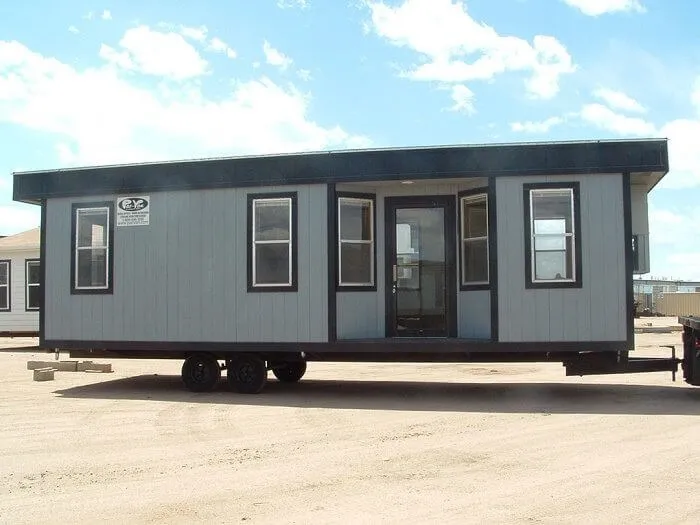
Toilets are one piece of a compliant site, and most jobs need debris removal running alongside them. A framing crew generating cutoffs and packaging waste typically needs a 10 yard dumpster rental, which holds around 10 cubic yards, or roughly 270 cubic feet, of debris, which answers how many cubic feet in a 10 yard dumpster most crews ask about. Bigger teardown or renovation jobs move up to a 20 yard dumpster rental, running about 22 feet long and holding close to 540 cubic feet, which covers how many cubic feet in a 20 yard dumpster, with a typical weight capacity in the 2 to 3 ton range depending on the load, which is roughly how many tons a 20 yard dumpster holds on a mixed debris load. A full commercial demo often calls for a 30 yard dumpster rental, which answers how many tons a 30 yard dumpster can hold at roughly 3 to 4 tons of mixed debris, or a 40 yard dumpster rental for the heaviest, bulkiest tear-outs, which holds around 4 to 5 tons, or about 1,080 cubic feet, answering how many cubic feet are in a 40 yard dumpster, and needs close to 60 feet of straight clearance behind the delivery truck. Check dumpster sizes and dimensions before ordering, and confirm dumpster weight limits so overage fees don't surprise you. Sites also need handwashing coverage under 29 CFR 1910.141(d)(2), which requires soap and towels or a hand-drying device, not just sanitizer. Fencing off the site perimeter often falls under temporary fence rental, and a jobsite trailer for storage or an office is common through storage container rental or mobile office trailer rental.
Where should units be placed on site?
Placement in the public right of way needs confirming with the city before delivery, so check with Kansas City's permitting office if your unit sits anywhere near a sidewalk, street, or curb lane. On private property, the main constraint is clearance: delivery trucks need roughly 60 feet of straight approach for dumpster drop-off, and porta potty units need a stable, level surface within reach of the service truck for weekly pumping. Keep accessible units on a route with a running slope no steeper than 1:12 per ADA Standards section 405.2, and make sure the approach path stays at least 36 inches wide per section 403.5.1. For layout help before delivery day, the porta potty placement guide covers ground surface and clearance in more detail, and porta potty permit requirements walks through what to confirm with the city. Prime Point Porta Potty coordinates placement with site supervisors on delivery day to keep units clear of active work zones and accessible routes alike.
How many porta potties do I need for 100 guests?
Plan for 2 to 3 standard units for a 4-hour event with 100 guests, plus one ADA-accessible unit under ADA Standards section 213.2. Add one more unit if alcohol is served. An 8-hour event at the same headcount pushes closer to 3 to 4 units total.
How many tons does a 30 yard dumpster hold?
A 30 yard dumpster typically holds around 3 to 4 tons of mixed construction debris, though actual capacity depends on material density. Concrete and shingles fill weight capacity fast; framing scraps fill volume first. Check dumpster weight limits before loading heavy material.
How many feet is a 20 yard dumpster?
A 20 yard dumpster runs about 22 feet long, 8 feet wide, and 4.5 feet tall, holding roughly 540 cubic feet of debris. Exact dimensions vary slightly between suppliers. See dumpster sizes and dimensions for the full lineup.
Do I need extra units if alcohol is served?
Yes. Alcohol increases bathroom trips noticeably, so add roughly 10 to 15 percent more units beyond the dry-event count. A 150-guest wedding with an open bar should plan for one extra unit above the standard four-hour ratio.
How many porta potties for a construction crew of 50?
A 50-person crew falls in the 40-199 worker bracket under OSHA 1926.51(c), which calls for one toilet seat and one urinal per 40 workers. In practice, that usually works out to two to three combined units once shift overlap and site layout are factored in.
Can I mix standard units and an ADA unit in one order?
Yes, and it's standard practice. ADA Standards section 213.2 requires at least one accessible unit in any cluster, so most orders combine several standard porta potty rental units with one ADA unit rather than ordering an all-accessible fleet.
Next step
Get a delivery date
Tell us the address, the dates and the headcount. We size the order and confirm the route.