
What Kind of Restroom Works for Field Crews?
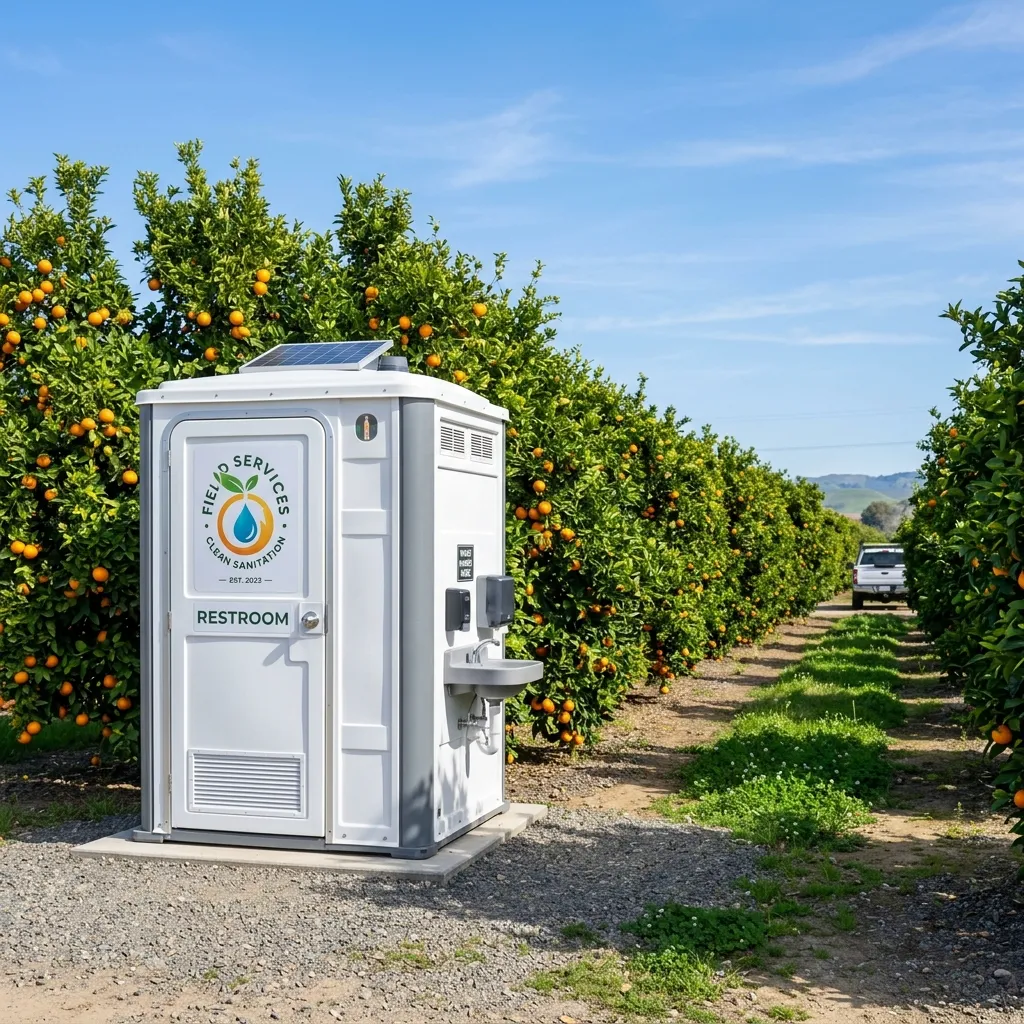
Most row-crop and livestock operations near Kansas City start with a standard porta potty rental. It is the same 44 by 48 inch footprint unit used on construction sites, standing about 92 inches tall with a 60 to 70 gallon holding tank. That tank size matters on a farm because service trucks often can't reach every field edge on a tight schedule, so a bigger buffer between pumps helps. Operations that hire seasonal labor, from detasseling crews to harvest hands, fall under OSHA 1928.110, the federal field sanitation standard. It requires potable water, a toilet, and handwashing access for hand-labor employees, at one facility per 20 workers, and it has to sit within a quarter mile walk of wherever people are working. That last part is the piece a lot of farm managers miss: a single unit parked at the barn does not satisfy a rule written around walking distance, not property lines. If a crew spreads across two or three fields, that usually means two or three units, not one. For crews working near grain bins or during pesticide application, a handwashing station rental or portable sink rental should sit next to the toilet, not down the road at the equipment shed. Farms running larger crews sometimes add a deluxe flushable porta potty at a central staging area where supervisors and drivers rotate through. Pricing on the deluxe unit runs from $85 to $1,200 a day depending on options, with weekly rates from $150 to $290.
Does OSHA or USDA Require Restrooms on a Farm?
Yes, if you hire hand-labor employees. OSHA 1928.110 covers field sanitation for agricultural hand labor specifically, separate from the construction rule (1926.51(c)) that governs job sites and the general industry rule (1910.141(c)(1)(i)) that governs indoor workplaces. A cattle operation, a vegetable farm running pickers, or a vineyard bringing in seasonal crews near Kansas City all fall under the 1928.110 language: potable water under 1926.51(a)(1), toilet facilities, and handwashing, all within that quarter mile walk. Farms that also run construction-style projects, like building a new grain facility or renovating a barn, need to look at OSHA portable toilet requirements separately, because that work crew is covered by the construction ratio, not the field sanitation one. It is common on a working farm to have both rules apply on the same piece of ground at the same time: field hands under 1928.110, construction crew under 1926.51(c). We spec units for both categories and can split delivery accordingly. Farms near North Kansas City, 2.6 miles northwest, and Gladstone, 8.2 miles north, often mix rural acreage with suburban-edge development, which is exactly when both standards show up on one property.
How Many Units Does a Harvest or Livestock Operation Need?
Start with one unit per 20 workers under the quarter mile rule, then add units for distance, not headcount alone. A 300 acre row-crop operation with three field entrances usually needs three placements even if the total crew stays under 20, because 1928.110 is written around walking distance. Our how many porta potties do I need guide walks through the math for mixed crews. Livestock operations with year-round labor sometimes prefer a monthly porta potty rental instead of swapping units seasonally; monthly standard rates run $125 to $325. Seasonal harvest crews closer to town, including operations near Liberty, 15.0 miles northeast, and Raytown, 13.6 miles southeast, tend to book by the week during peak harvest and drop back to nothing in the off months. Servicing follows the ANSI/PSAI Z4.3 baseline of one visit per week for up to 10 users over a 40 hour week, though dusty field conditions and longer shifts often push farms to twice-weekly service. Winter operations should also check porta potty in winter before locking in a schedule, since freeze protection changes servicing needs. Farms weighing delivery logistics can review porta potty placement guide for the access and ground stability details that apply just as much to a gravel farm lane as a job site.
Do I need a handwashing station separate from the toilet?
Yes, for hand-labor crews under 1928.110, and always if workers handle pesticides or herbicides, which triggers OSHA 1926.51(f)(1) washing requirements. Soap and towels are required under 29 CFR 1910.141(d)(2); hand sanitizer alone does not satisfy it. Pair a toilet with a hand sanitizer station rental only as a supplement, not a substitute.
Can I rent for just one harvest season?
Yes. Most farms book by the week or month during active harvest, then cancel until next season. Check porta potty rental cost for how day, week, and month pricing compares before committing to a term.
What if my crew works spread across multiple fields?
Split placements so no worker walks more than a quarter mile, per OSHA 1928.110. That often means multiple standard units rather than one central unit. Our porta potty rental per day page covers short-notice placement for shifting field work.
Do I need an ADA unit on a farm?
Only if your crew or visitors need accessible access. ADA Standards 213.2 requires at least 5 percent of clustered units be accessible, with a minimum of one. See ADA accessible porta potty for specs and the $120 to $240 weekly range.
What happens if a delivery truck can't reach my field?
Tell us the access conditions before delivery. Roll-off and service trucks generally need clear approach room, and rural lanes vary. Call Prime Point Porta Potty or request a quote to confirm access ahead of your first delivery.
Next step
Get a delivery date
Tell us the address, the dates and the headcount. We size the order and confirm the route.