
What Does Septic Tank Cleaning Actually Involve?
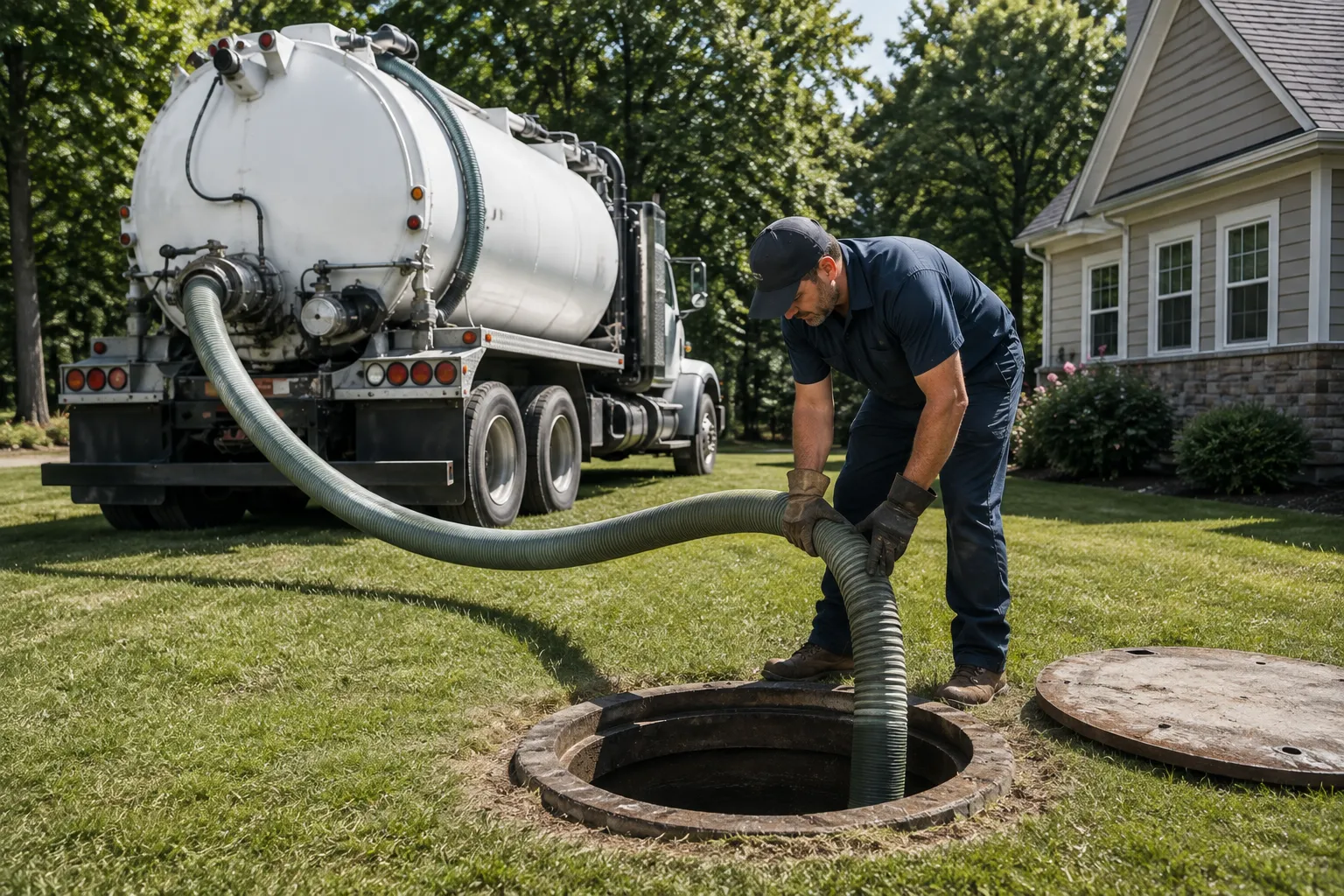
Cleaning goes a step past pumping. A pump-out removes liquid and loose waste. A full cleaning also breaks up and removes the sludge layer stuck to the tank walls and bottom, plus scum floating on top, so the tank starts its next cycle closer to empty than a pump-out alone leaves it. A typical residential tank holds around 1,000 gallons and, per our septic pumping service data, gets pumped every 3 to 5 years based on tank size and how many people live in the house. If you are not sure which service you need, our how often to pump a septic tank guide breaks down the difference in more detail. Cleaning also gives the crew a chance to check baffles and the outlet tee for damage before they close things back up, similar to how a porta potty rental checklist covers pre-service checks on the sanitation side. Kansas City clay soil can shift a tank slightly over the years, so a visual check during cleaning catches problems early, the same reasoning behind our porta potty placement guide for ground stability on job sites. If your property has a grease interceptor instead of a standard septic tank, that runs on a different trigger. Interceptors get pumped once fats, oils, grease and solids reach 25 percent of the liquid depth, and our grease trap pumping crews check that ratio on-site rather than guessing by schedule.
How Often Should Septic Tank Cleaning Happen?
Every 3 to 5 years is the standard window for a residential tank, and tank size versus household size is what moves you toward one end or the other. A bigger household pushing more water and waste through a smaller tank should lean toward the 3-year mark. A couple in a home with a larger tank can often stretch closer to 5, much like sizing decisions covered in our how many porta potties do I need guide for larger properties. Warning signs speed that timeline up regardless of what the calendar says. Slow drains, gurgling pipes, standing water near the drain field or a sewage smell in the yard all mean call sooner, not later. We cover the specifics on our septic tank warning signs page. Kansas City households on well-maintained systems can usually stick to the standard window, but anyone unsure should ask a crew to check tank levels during a routine visit rather than wait for a symptom. Skipping cleanings does not save money in the long run, the same logic that applies to skipping a porta potty monthly rental service interval on a long job. Solids that back up into the drain field can mean a much bigger repair than a routine service would have cost, and that repair is not something we quote here.
What Does Septic Tank Cleaning Cost in Kansas City?
Pricing depends on tank access, how full the tank is, and whether it is a routine visit or an emergency call, similar to how porta potty rental cost shifts with delivery distance and rental length. Here is what a standard service visit looks like:
| Service | Duration | Typical Range |
|---|---|---|
| Septic pumping/cleaning visit | day | $150 to $300 |
| Septic service | weekend | $50 to $150 |
Weekend septic calls run in that same general band, though timing and access still move the number, much like weekend pricing on porta potty rental per day service. Emergency calls outside normal hours cost more than a scheduled visit, so booking ahead when you notice early warning signs is the cheaper path. For a fuller cost breakdown across service types, see septic tank pumping cost. If your system backs up outside business hours, our emergency septic service crews handle Kansas City calls without making you wait for the next open slot. Homes needing a temporary solution while a tank or drain field gets repaired can also look at a holding tank rental to keep the household running in the meantime.
Why Is Septic Tank Cleaning Different From Pumping?
Pumping empties the tank. Cleaning scrapes and removes what pumping leaves stuck to the tank walls, which is why the two often get bundled into one visit rather than billed as separate services. Skipping the cleaning step and only pumping every few years can let sludge build up faster than expected, shortening the real interval between service calls even if you are following the standard 3 to 5 year rule on paper. This matters more for households running garbage disposals heavily, since more solids enter the tank per load, a load pattern worth mentioning if you also run a handwashing station rental or portable sink rental on the same property. Commercial kitchens face a related but different problem with grease interceptors, which get cleaned based on the 25 percent fats-oils-grease-and-solids threshold rather than a fixed calendar, and our septic tank cleaning crews check both types on the same route through Kansas City when a property needs it. Renovation projects that add a bathroom or increase household size should also plan for a shorter interval going forward, since more fixtures draining into the same tank means faster buildup, and a storage container rental or temporary fence rental can help secure the site while work is underway. If you are mid-renovation and short on working plumbing, a home renovation porta potty covers the gap without putting extra load on a septic system that is already due for service.
Can I Find Septic Tank Cleaning Near Me in Kansas City?
Yes, Prime Point Porta Potty services Kansas City directly and reaches the towns around it too, including North Kansas City 2.6 miles northwest, Avondale 4.1 miles north, Gladstone 8.2 miles north and Raytown 13.6 miles southeast. Routing crews through a set service area keeps scheduling tighter, which matters most when a tank is already backing up, the same routing logic behind our porta potty rental in North Kansas City, MO and porta potty rental in Liberty, MO pages. For construction sites or agricultural properties running field crews, note that septic cleaning is a separate service from job-site sanitation covered under OSHA 1926.51(c) toilet ratios, and from the field sanitation rule at OSHA 1928.110 for hand-labor agricultural crews. Those standards govern portable toilets on active work sites, not residential or commercial septic systems, so do not expect a septic cleaning crew to also handle site toilet counts. If you are setting up sanitation for a job site rather than servicing a home septic tank, our construction site services and farm and agricultural restrooms pages cover that side separately. Full service area details, including nearby towns not listed above, are on our service areas page.
How much does septic tank cleaning cost?
A standard service visit typically runs $150 to $300 for the day, with weekend service running $50 to $150. Actual cost depends on tank access, fill level and whether it is scheduled or an emergency call outside normal hours.
How often does a septic tank need cleaning?
Most residential tanks need cleaning every 3 to 5 years, based on tank size and household size. Larger households or smaller tanks should lean toward the 3-year end; smaller households with larger tanks can often stretch closer to 5.
What is the difference between cleaning and pumping a septic tank?
Pumping removes liquid waste from the tank. Cleaning goes further, scraping sludge and scum off the tank walls and bottom. Most service visits combine both so the tank starts its next cycle as empty as possible.
How do I know my septic tank needs cleaning?
Slow drains, gurgling pipes, standing water near the drain field, or a sewage smell in the yard are all signs. Do not wait for the calendar if you notice any of these; call sooner to avoid a bigger repair.
Does a grease trap get cleaned the same way as a septic tank?
No. Grease interceptors get pumped once fats, oils, grease and solids reach 25 percent of the liquid depth, a different trigger than the standard 3 to 5 year septic schedule. Check levels rather than guessing by date.
Next step
Get a delivery date
Tell us the address, the dates and the headcount. We size the order and confirm the route.