
How fast can Prime Point Porta Potty respond to a disaster in Kansas City?
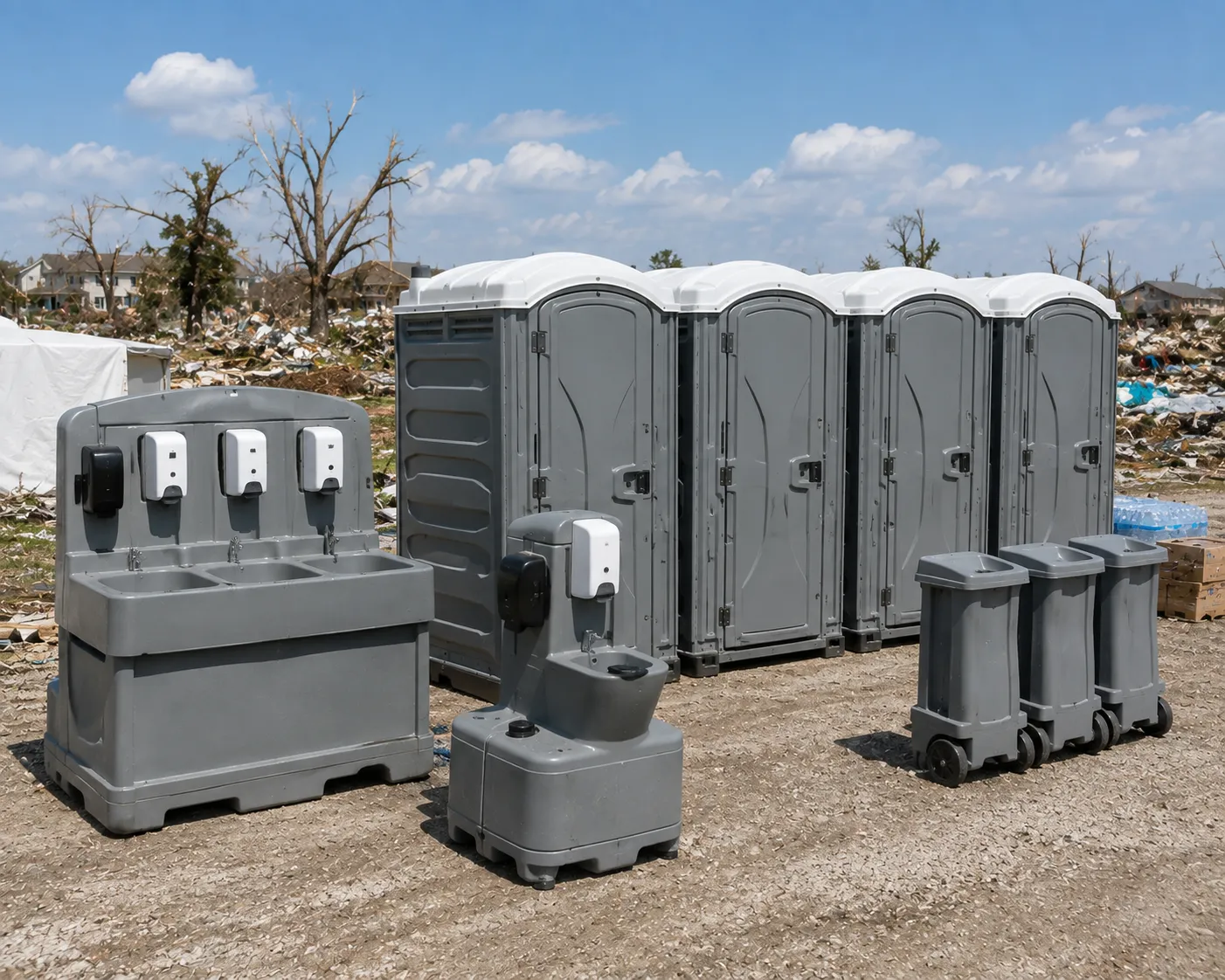
Disaster response is not the same job as booking a unit for a backyard party three weeks out. When water mains fail or a tornado cuts power across a stretch of Kansas City, the calls come in fast and the trucks need to move faster. Prime Point Porta Potty prioritizes emergency dispatch over standard scheduling during declared events, which means a crew already routed toward emergency porta potty rental work can reroute mid-day if a shelter or command post needs units first. A roll-off delivery truck needs about 60 feet of straight clearance behind it, so staging areas at shelters and command posts get scouted before the truck rolls, not after. For agencies coordinating relief across North Kansas City, 2.6 miles northwest, or out toward Gladstone, 8.2 miles north, that clearance check matters just as much as it does downtown. Crews also bring handwashing station rental units alongside toilets, since OSHA 1926.51(a)(1) calls for an adequate supply of potable water in any place of employment, and a disaster site counts. If the situation calls for something more durable than a standard stall, a restroom trailer rental can serve as a semi-permanent facility for a shelter that will be running for weeks, not days.
What sanitation equipment works best for a disaster shelter or relief site?
Different phases of a disaster call for different equipment, and matching the right unit to the right stage saves time and money later. In the first 48 hours, standard porta potty rental units are the fastest to deploy, each with a 60 to 70 gallon holding tank and a footprint of about 44 by 48 inches, small enough to fit against a shelter wall or loading dock without blocking access. Once a shelter is expected to run more than a few days, a 4 stall restroom trailer or 8 stall restroom trailer handles higher traffic with less servicing. Displaced households and workers with mobility needs still require accessible facilities, and ADA Standards section 213.2 requires that at least 5 percent of clustered single-user units, and never fewer than one, be accessible; an ADA accessible porta potty meets that standard on its own. For sites without working water, a portable sink rental or hand sanitizer station rental fills the gap, though 29 CFR 1910.141(d)(2) is clear that soap and towels or a hand drying device are required, since hand sanitizer alone does not satisfy that standard. Debris cleanup crews working alongside shelter operations often need a roll-off dumpster rental on site too, and temporary fence rental can secure a staging yard or keep foot traffic away from downed lines.
| unit | duration | typical price |
|---|---|---|
| standard | day | $150 |
| standard | week | $200 |
| ada | day | $230 |
| trailer | day | $800 |
| service_fee | day | $175 |
Prices above reflect the measured range for each unit and duration; a longer disaster deployment should be quoted by the week rather than assembled from daily rates, since our own porta potty rental cost data shows weekly pricing runs higher than a single day but lower than stacking days end to end.
Do disaster relief sites need permits for portable sanitation in Kansas City?
Placement in the public right of way needs confirming with the city before units go down, especially for sites set up in a parking lane, median or closed street during an active response. Kansas City permitting for temporary sanitation has not been independently verified for this page, so crews coordinate directly with whichever department is managing the incident, whether that is a city office, county emergency management, or a private property owner hosting a shelter. For planning ahead of the next event, our porta potty permit requirements page walks through what to check before delivery day, and the porta potty placement guide covers ground surface and clearance needs that apply whether it is a disaster or a scheduled job. Worker-facing sites still fall under OSHA 1926.51(c)(1), which sets one toilet for 20 workers or fewer on a relief crew, scaling up from there. Sites running debris removal work near Raytown, 13.6 miles southeast, or Liberty, 15.0 miles northeast, follow the same ratio regardless of distance from downtown Kansas City. Households sheltering in place after a septic failure sometimes need a holding tank rental rather than a toilet at all, and our emergency septic service crews handle that alongside standard delivery routes.
How many portable toilets does a shelter need?
It depends on population and duration, not square footage. OSHA 1926.51(c)(1) sets the baseline ratio for worker sites at one toilet per 20 people, and shelters generally plan tighter than that. Our how many porta potties do i need guide walks through the math for shelters, work crews and events.
Can Prime Point Porta Potty deliver the same day as a disaster declaration?
Often yes, depending on truck availability and road conditions across Kansas City. Emergency routing takes priority over standard bookings once a declaration comes through. Call ahead through request a quote so dispatch knows the address and unit count before the truck leaves the yard.
What if the shelter site has no water or power?
That is normal for disaster response. A portable sink rental brings its own water supply, and a light tower rental or temporary power pole covers lighting and power needs until utilities are restored.
Do relief sites need ADA-compliant restrooms?
Yes, whenever units are clustered for public use. ADA Standards section 213.2 requires at least one accessible unit in any cluster, and our ADA restroom requirements page covers clearance and reach specs in detail.
How is debris from a disaster site disposed of?
Most relief operations pair sanitation with a roll-off for storm debris and damaged materials. Check our what cannot go in a dumpster page before loading, since hazardous materials need separate handling.
Next step
Get a delivery date
Tell us the address, the dates and the headcount. We size the order and confirm the route.