
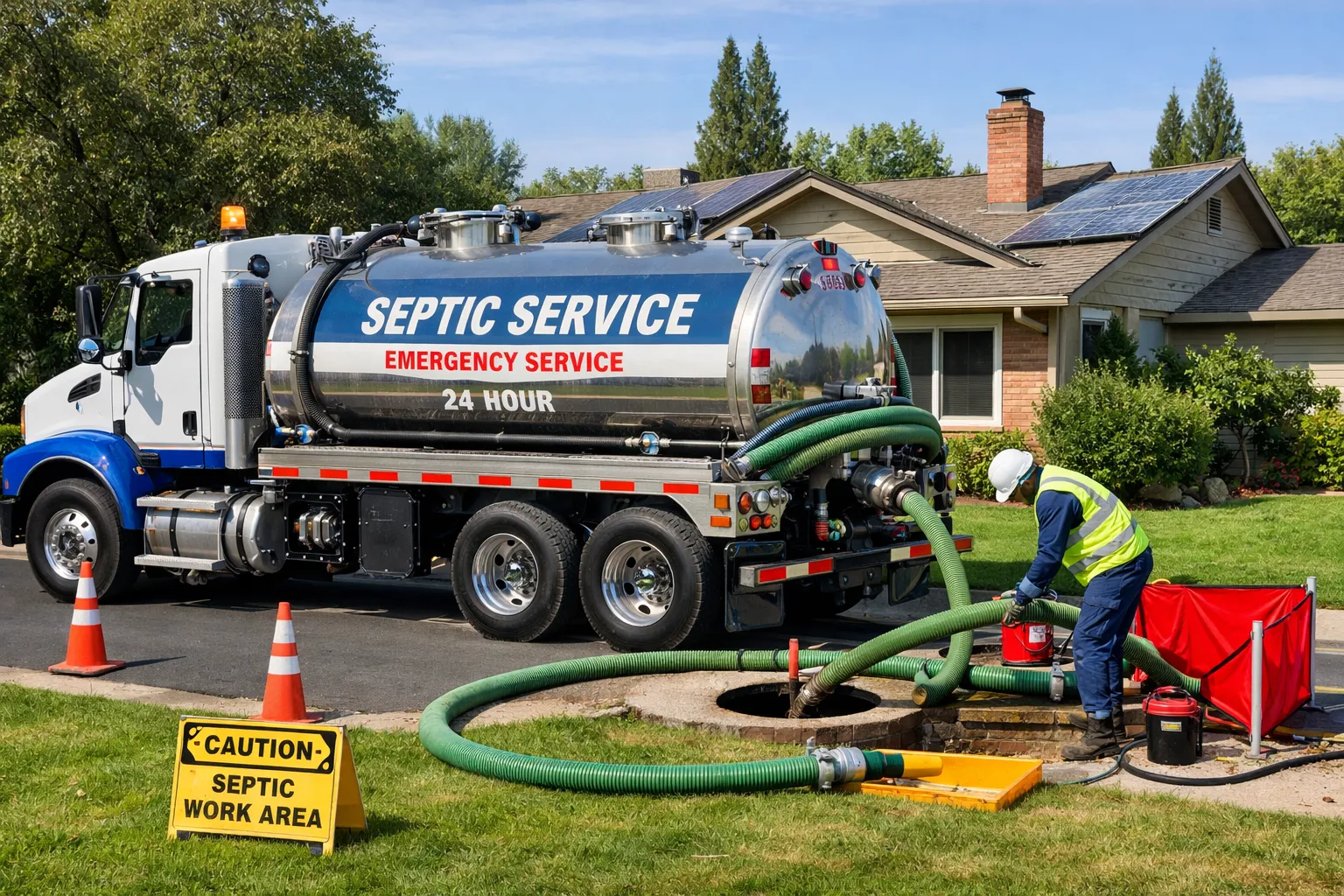
How Often Does a Septic Tank Need Pumping?
The 3 to 5 year interval is a starting point, not a guarantee. Tank size and household size drive the real number. A family of six in a small tank fills it faster than a couple in an oversized one. Homes near North Kansas City, 2.6 miles northwest, and out toward Gladstone, 8.2 miles north, often have older systems built for smaller households, which shortens the safe interval. If you run a garbage disposal hard, do laundry for a big crew, or have guests staying for weeks, pump sooner. Waiting too long backs solids into the drain field, and that repair costs far more than pumping, which is also covered on our septic pumping service overview. If you are unsure when your tank was last serviced, check septic tank warning signs before guessing. We also handle grease trap pumping for restaurants and commercial kitchens on a different schedule, since fats, oils and grease build up faster than solids in a home tank. A tank is due for grease interceptor service once FOG and solids reach 25 percent of the liquid depth. That is a commercial standard, not a home septic rule, but it explains why restaurant tanks get pumped far more often than houses, and it's why we treat septic tank cleaning scheduling differently for kitchens than for homes.
What Are the Warning Signs a Septic Tank Needs Pumping?
Slow drains in more than one fixture at once, gurgling pipes, and standing water over the drain field are the clearest signs. Sewage odor near the tank lid or a suspiciously green, soggy patch of lawn over the tank means it is likely overdue. Backups into tubs or the lowest drain in the house are a late-stage warning, not an early one. If a toilet flushes slow and a sink backs up at the same time, that is not two problems, it is one full tank, and the same logic applies whether you're checking septic tank pumping cost estimates or just watching for trouble. Kansas City clay soil holds water, which can mask drainfield trouble until it is bad, so homeowners near Randolph, 5.9 miles northeast, should watch for soggy patches even without an obvious odor. We cover the full list on our septic tank warning signs page. If you are dealing with a backup right now, don't wait for a scheduled slot. Call for emergency septic service and we will get a truck out. This is different from routine septic tank cleaning, which is planned maintenance rather than a response to a failure already underway.
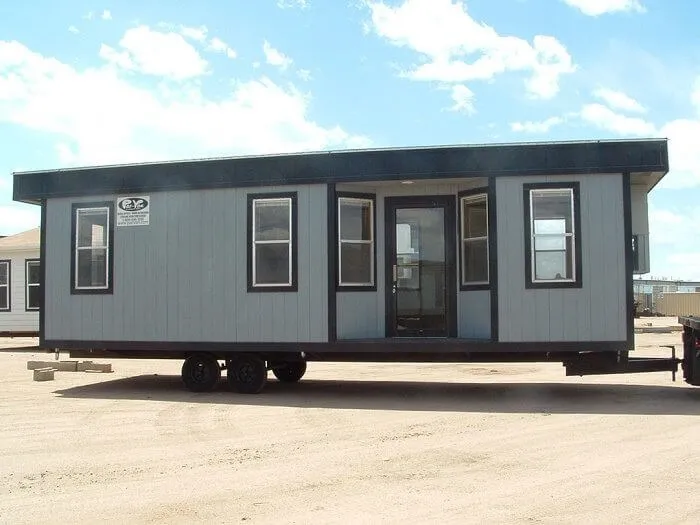
What Does a Septic Pumping Service Include?
A full service pulls the tank down to bare walls, not just the liquid layer, because solids at the bottom are what causes drainfield damage down the line. The crew locates and uncovers the lid, pumps the tank completely, and does a quick visual check of the baffles and walls while it's open. If we spot cracks, root intrusion, or a failing baffle, we tell you before we leave, not after the next backup. For homes without a home wired for it, we also handle straightforward pump-outs with no add-on inspection if that's all you want, similar to how a porta john rental can be a simple no-frills booking. Compare this to septic tank cleaning, which can mean a lighter service between full pumps. Commercial kitchens need something different entirely, covered on our grease trap pumping page, since FOG buildup behaves nothing like household solids, and kitchens running events on-site sometimes add a handwashing station rental unit as well. Construction sites and events without sewer hookup often need a holding tank rental instead of a fixed septic system, and we service those tanks on the same truck routes. If your property sits on a private system out near Liberty, 15.0 miles northeast, or Raytown, 13.6 miles southeast, we run the same full-tank standard regardless of distance from downtown Kansas City, the same way our porta potty rental in Kansas City page covers the whole metro without a distance penalty.
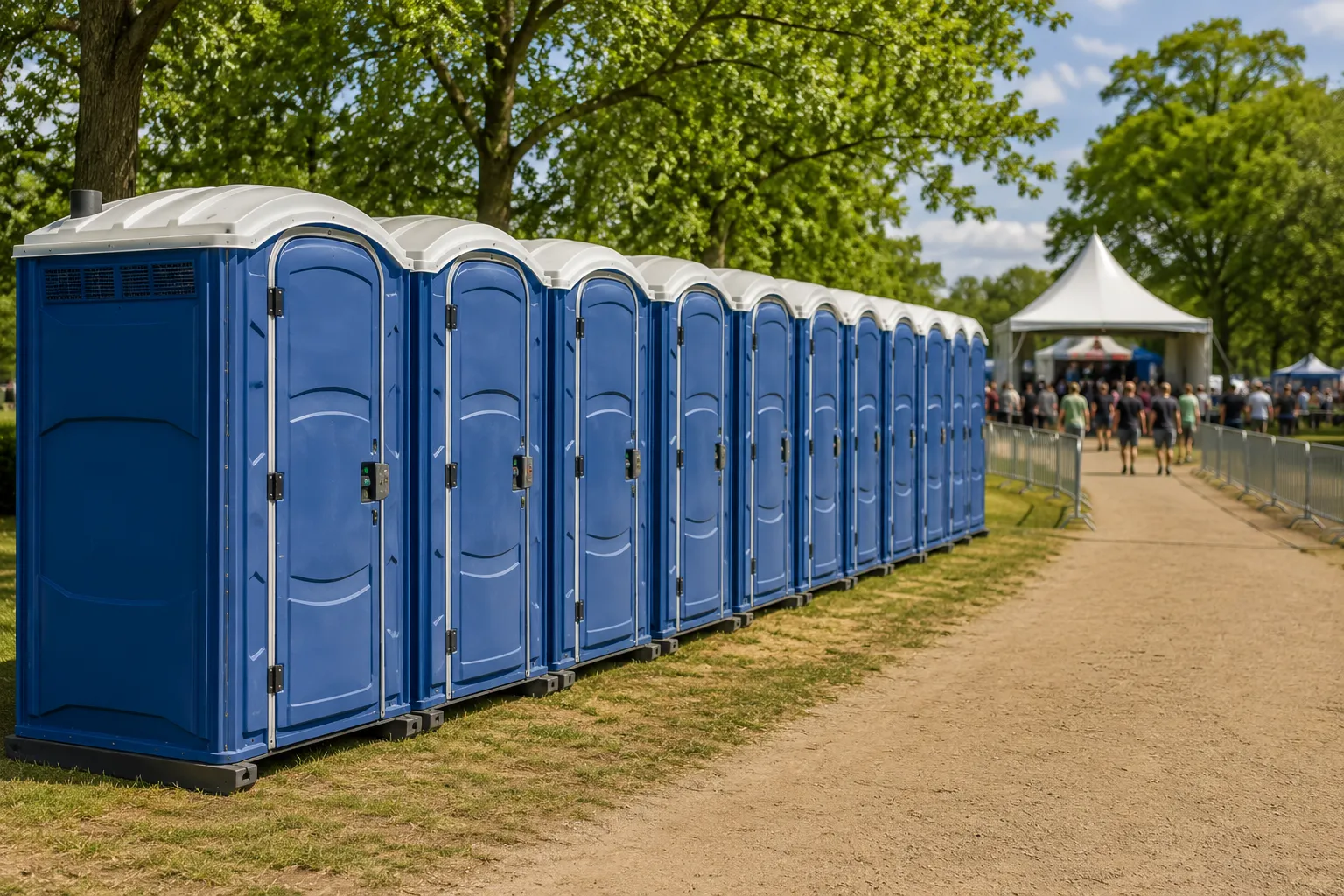
How Much Does Septic Tank Pumping Cost?
| service | duration | low | typical | high |
|---|---|---|---|---|
| septic pumping | day rate | $150 | $250 | $300 |
| septic pumping | weekend | $50 | $100 | $150 |
Day-rate pumping runs $150 to $300 depending on tank size, access, and how much solid buildup the crew has to work through. The weekend figure above reflects a lighter add-on visit, not a full comparable service, so don't read it as a discount on the day rate. A 1,000 gallon tank pumping cost sits toward the middle of that day-rate band for most Kansas City homes with normal truck access. Tight driveways, buried lids, or a tank set far from the street can push a job toward the top of the range because of extra labor, not because the tank itself is bigger. If you're comparing this to portable sanitation costs for a separate job, our porta potty rental cost, porta potty rental per day, and standard porta potty rental pages break those out separately. Homeowners planning ahead for a multi-year gap between pumps sometimes ask about a monthly porta potty rental for guest overflow instead of stressing an aging tank, which is a reasonable workaround during a renovation, and pairs well with a home renovation porta potty if the crew is on-site for weeks.
Do You Offer Holding Tank Service for Construction and Events?
Yes. A holding tank is different from a septic system. It has no drainfield and needs scheduled pump-outs on a set interval rather than a once-every-few-years visit. We rent and service holding tanks for job sites, remote events, and properties without sewer access, and we pair them with portable toilet rental, a restroom trailer rental, or an ADA accessible porta potty when a site needs both. Construction crews already using construction site services from us often add a holding tank when there's no municipal hookup nearby. ANSI/PSAI Z4.3 sets a baseline service interval of once per week for up to 10 users over a standard 40 hour week, and we use that as a starting point before adjusting for actual crew size. Farms and agricultural operations have their own sanitation needs too, covered on farm and agricultural restrooms, where OSHA 1928.110 sets field sanitation rules for hand-labor employees, including one facility per 20 workers within a quarter mile walk, and where a portable sink rental often rounds out the setup. If your event is smaller and shorter, check event restroom rental or wedding restroom rental for combined restroom and holding tank packages instead of separate line items.
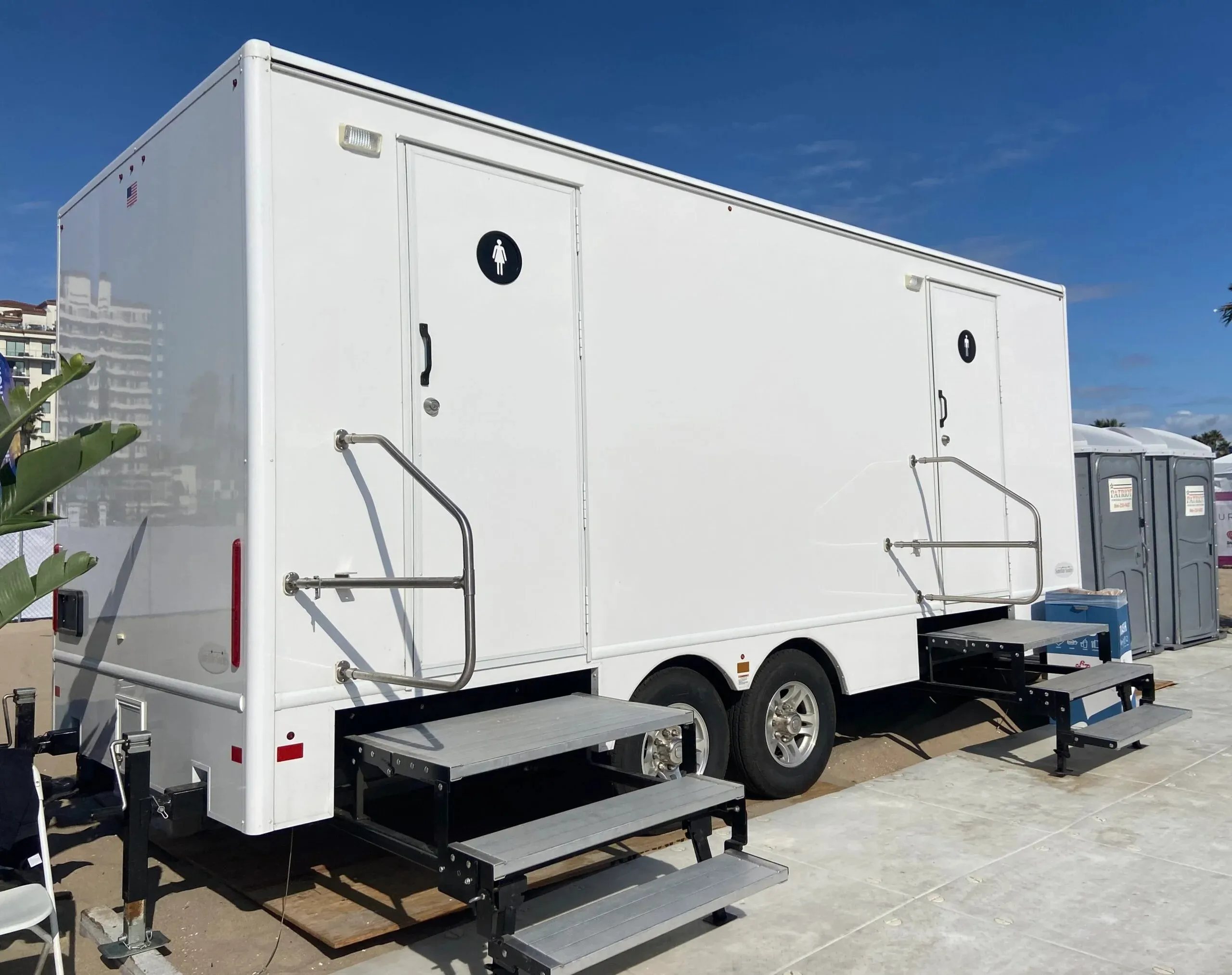
What Happens in a Septic Emergency?
A backup into the house, sewage surfacing in the yard, or a tank that's clearly overflowed all count as emergencies, and none of them wait well. We prioritize these calls ahead of routine septic tank cleaning appointments because a full tank under pressure can force sewage back into fixtures fast. Our emergency septic service page has more on response, but the short version is: stop using water in the house, don't run the disposal, and call. Kansas City winters can freeze exposed lines and lids, which sometimes triggers emergency calls that are really about frozen access rather than a full tank, so tell the dispatcher what you're actually seeing. If the emergency is really a site-wide sanitation gap rather than a single tank failure, we also do disaster relief sanitation work, deploying handwashing station rental units, hand sanitizer station rental stands, and portable toilets alongside pump trucks. For homes further out, like Overland Park at 23.7 miles southwest or Olathe at 24.5 miles southwest, response still happens, just plan for drive time on top of the work itself, the same planning we mention on our service areas page for the wider metro.
How much does septic tank pumping cost for a 1,000 gallon tank?
Expect $150 to $300 for a standard day-rate visit, with most 1,000 gallon jobs landing in the middle of that band. Difficult access, deep-buried lids, or heavy solid buildup push costs toward the top.
How often should a septic tank be pumped?
Every 3 to 5 years for most residential tanks, driven by tank size and household size. Larger households or heavy disposal use shorten that window; light use in an oversized tank can stretch it.
What are signs my septic tank needs pumping now?
Slow drains in multiple fixtures at once, gurgling pipes, sewage odor near the tank, and soggy or unusually green grass over the drainfield. Any backup into the house means don't wait, call for service.
Is a holding tank the same as a septic system?
No. A holding tank has no drainfield and needs scheduled pump-outs on a fixed interval, unlike a septic tank's multi-year cycle. We use ANSI/PSAI Z4.3's weekly baseline for up to 10 users as a starting service interval.
Do you offer emergency septic pumping in Kansas City?
Yes. Backups, surfacing sewage, and overflowing tanks get priority dispatch ahead of routine appointments. Stop using water in the house and call as soon as you notice a problem.
Can I rent a holding tank instead of pumping an existing septic system?
Yes, for construction sites, events, or properties without sewer access. Holding tanks pair well with portable toilets or a restroom trailer and follow a scheduled pump-out interval rather than a multi-year cycle.
Next step
Get a delivery date
Tell us the address, the dates and the headcount. We size the order and confirm the route.