
How do porta potties work day to day?
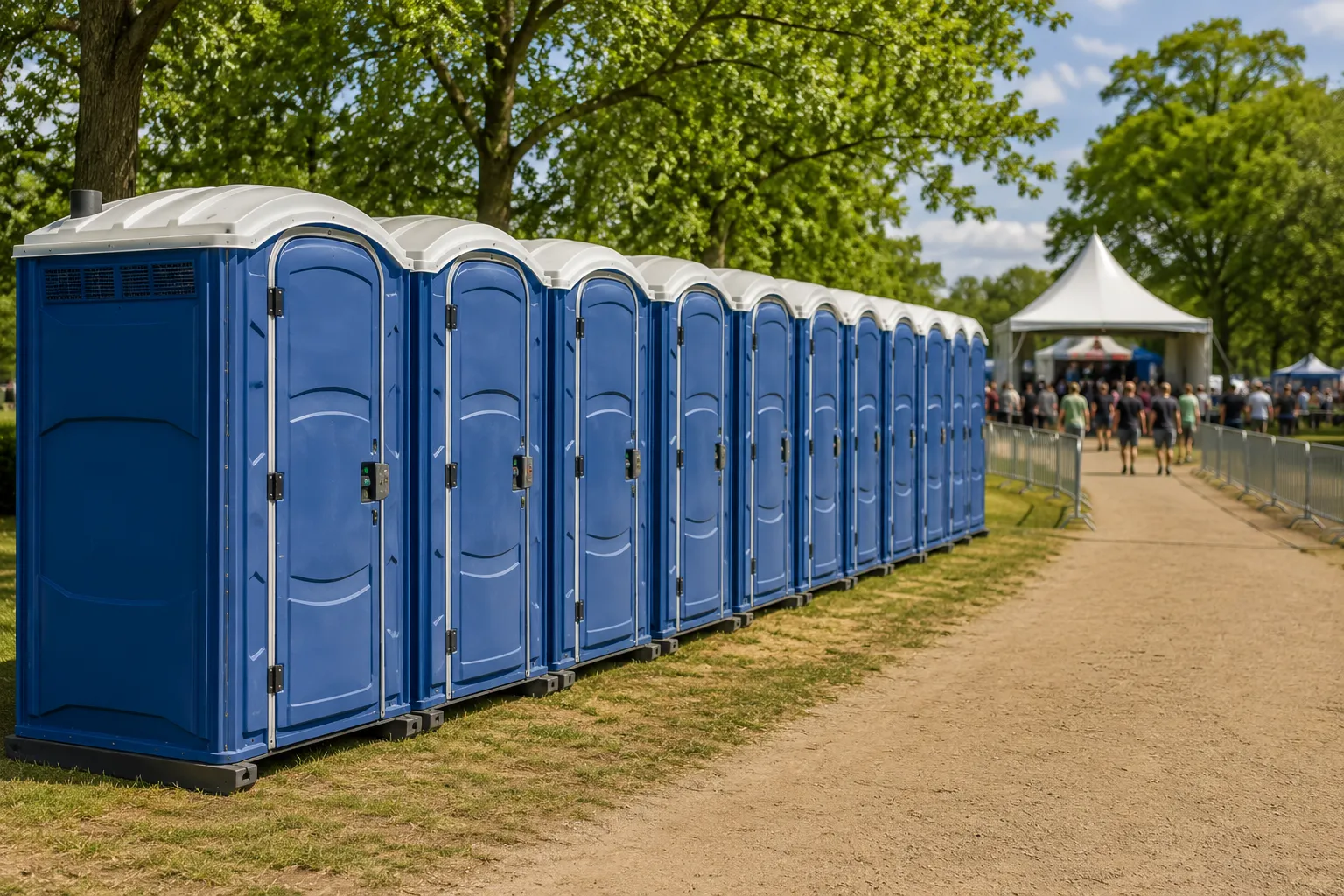
There is no water line running to a typical unit. Waste drops straight into the holding tank, where a blue chemical breaks down solids and knocks back odor between service visits. A vent stack pulls air up and out instead of back at you. Foot traffic determines how fast that tank fills, which is why a busy job site fills faster than a quiet backyard project. ANSI/PSAI Z4.3 sets a baseline service interval of once a week for up to 10 users across a 40 hour week, and a Kansas City crew running two shifts will need more frequent stops than that. If you are trying to figure out how many stalls a crew actually needs, the porta potty placement guide and the how many porta potties do I need calculator both walk through it. For a job with 20 or fewer workers, OSHA 1926.51(c)(1) calls for one toilet facility, and the ratio climbs from there as headcount grows. Restrooms need a stable, level pad, which matters more in Kansas City's freeze-thaw winters than people expect, covered in porta potty in winter.
How does a portable sink work?
A portable sink is a self-contained unit: a fresh water tank feeds the faucet by foot pump or battery pump, and a separate gray water tank catches the runoff below. No hose bib needed, no drain to hook up. Soap and paper towels sit right on the unit, which matters because 29 CFR 1910.141(d)(2) specifies that washing facilities need soap and towels or a dryer, not hand sanitizer alone. That distinction comes up constantly on food vendor sites and at construction gates in Kansas City where a sanitizer bottle gets mistaken for compliance. If your crew is applying paint, coatings, herbicides or insecticides, OSHA 1926.51(f)(1) requires washing facilities on top of the toilets, a detail a lot of site supervisors miss until an inspector asks. See handwashing station rental and portable sink rental for unit options, and handwashing requirements for the fuller breakdown.
Do flushable porta potties work differently?
Yes. A deluxe flushable unit uses a small onboard freshwater reservoir and a hand or foot pump to push a rinse of water through the bowl after each use, instead of relying on the chemical tank alone to manage odor. That reservoir needs topping off, and the waste tank still needs pumping, so service frequency does not change much versus a standard unit. Weddings, festivals and corporate events around Kansas City tend to request these over standard units because the flush cycle keeps the bowl looking cleaner between users. Pricing runs higher than a standard rental, detailed on deluxe flushable porta potty. For accessible stalls, ADA Standards 213.2 requires that where units are clustered, at least 5 percent, and never fewer than one, meet accessibility specs, including the 60 inch turning circle in 304.3.1 and the 32 inch clear door opening in 404.2.3. See ADA accessible porta potty and ADA restroom requirements.
Why do septic tank cleaning chemicals matter?
The chemical in a porta potty tank and the chemical treatment in a home septic tank do different jobs, and mixing up the two causes problems. Porta potty deodorizer is built to suppress odor and slow decomposition between pump-outs on a short service cycle. Septic tank cleaning chemicals marketed for home systems are a different category, and dumping the wrong product down a residential line can throw off the bacterial balance a septic tank depends on. A typical residential septic tank gets pumped every 3 to 5 years, depending on tank size and household size, a fact worth knowing before reaching for any additive. If your Kansas City tank is showing slow drains or backup, read septic tank warning signs before assuming a chemical fix will solve it. Actual pump-outs are handled by a vac truck, covered on septic pumping service and septic tank cleaning, with costs laid out on septic tank pumping cost. Grease interceptors work on a different threshold entirely, pumped once fats, oils, grease and solids hit 25 percent of liquid depth, detailed on grease trap pumping.
| unit | duration | typical price |
|---|---|---|
| standard | day | $150 |
| standard | week | $200 |
| standard | month | $200 |
| deluxe | week | $250 |
| septic | day | $250 |
Pricing above reflects Kansas City market data; for the full breakdown see porta potty rental cost and porta potty rental per day. A construction worker running to a porta-potty on a busy downtown site puts more strain on a single unit than a low-traffic residential job, which is where construction site services and construction dumpster rental come in as part of the same site setup. Camping porta potties work the same tank-and-chemical way as a job site unit, just scaled for lighter, shorter-term use, as covered on camping porta potty.
How often does a porta potty get serviced?
Weekly is standard under ANSI/PSAI Z4.3 for up to 10 users over a 40 hour week, but high-traffic sites in Kansas City often need two or three visits weekly. Frequency depends on headcount, not just calendar days. See how often are porta potties cleaned.
Do porta potties need a water hookup?
No. A standard unit is fully self-contained with its own holding tank and no plumbing connection at all. Flushable and deluxe models carry a small internal freshwater reservoir instead of a permanent line. See how do porta potties work diagram style breakdowns for visuals.
Can I add a porta potty to an existing job site fast?
Yes, most Kansas City deliveries can turn around same day or next day depending on route capacity. If you need something urgently, emergency porta potty rental covers rush situations directly.
What chemical goes in a porta potty tank?
A blue deodorizing chemical formulated for portable sanitation, not a household septic additive. It suppresses odor and slows breakdown between service visits rather than treating a home leach field.
Is a monthly rental cheaper than renting weekly?
Yes, monthly rates are structured lower per week than short-term rentals. Compare durations directly on monthly porta potty rental before booking a long job in Kansas City.
Next step
Get a delivery date
Tell us the address, the dates and the headcount. We size the order and confirm the route.